Of Earth | Marquee
100% Plant-Based 0 Glycemic Index Low Calorie No Artificial Sweeteners Clean-Label Ingredients Made for Everyday Use

stevia

best monk fruit Sweeteners in India

How to Choose the Right Monk Fruit Sweetener

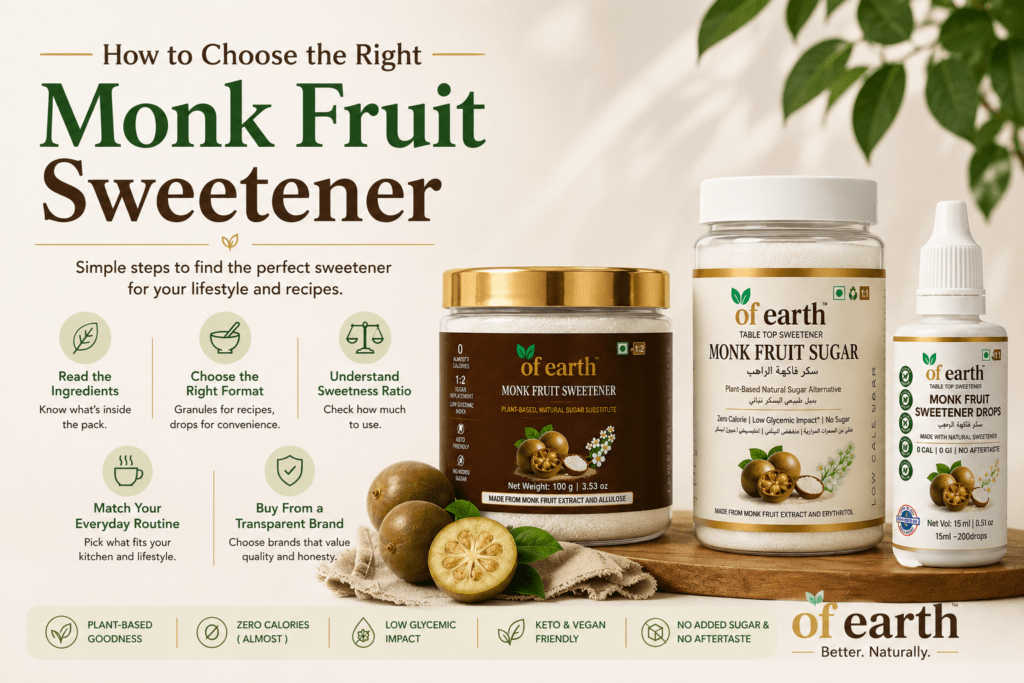
How to Choose the Right Monk Fruit Sweetener Walk into any supermarket or browse online, and you’ll quickly notice that there isn’t just one type of Monk Fruit Sweetener. Some products come in granules, others as liquid drops. Some are blended with allulose, while others contain erythritol or different ingredients. With so many choices available, selecting the right Monk Fruit Sweetener can seem overwhelming-especially if you’re buying one for the first time. The good news is that choosing the right product doesn’t have to be complicated. Once you understand a few key factors, you’ll be able to confidently select a sweetener that suits your kitchen, recipes and personal preferences. This article explains exactly what to look for before making your choice. Why Aren’t All Monk Fruit Sweeteners the Same? One of the biggest misconceptions is that every Monk Fruit Sweetener is identical. In reality, products can vary significantly depending on: This is why two products labelled “Monk Fruit Sweetener” may behave differently in recipes or taste slightly different. Understanding these differences helps you choose a product that’s right for you. Step 1: Always Read the Ingredient List The ingredient list is one of the most important things to check before purchasing any food product. Pure monk fruit extract is naturally very sweet, so most products combine it with other ingredients to make it practical for everyday use. Some commonly used ingredients include: Each formulation is created with a different purpose in mind. Rather than assuming every product is the same, take a moment to understand what you’re buying. At Of Earth, we believe transparency builds trust. That’s why every ingredient used in our products is clearly listed on the label. Step 2: Decide How You’ll Use It Before choosing a sweetener, think about where you’ll use it most often. For Tea and Coffee If your daily routine starts with a warm cup of tea or coffee, you’ll want a sweetener that dissolves easily and delivers consistent sweetness. Many people enjoy liquid drops for convenience, while others prefer granules because they resemble traditional sugar. For Everyday Cooking Preparing sauces, breakfast dishes or homemade desserts? Granulated Monk Fruit Sweeteners often integrate easily into recipes and are simple to measure. For Baking Baking requires more than sweetness alone. Texture, moisture and volume can all influence the final result, which is why different formulations may perform differently. Following the product’s usage instructions is always recommended for the best outcome. Step 3: Understand the Sweetness Ratio Not every Monk Fruit Sweetener replaces sugar in the same proportion. Some products are designed as: Others are formulated to be sweeter, meaning smaller quantities are needed. Knowing the sweetness ratio helps avoid overly sweet recipes and makes cooking much easier. Always check the packaging before using a new product. Step 4: Think About Taste Taste is personal. Some people enjoy a sweeter profile, while others look for something that feels familiar in everyday beverages. The flavour can vary depending on: Trying different products is often the best way to discover which one you enjoy most. Step 5: Choose the Right Format Monk Fruit Sweeteners are available in different forms, each offering unique advantages. Granules Granules are versatile and work well in many everyday recipes. They’re commonly used for: Liquid Drops Liquid Monk Fruit Drops are ideal when convenience matters. They’re popular for: Since there’s no measuring spoon required, many people find them easy to use while on the go. Step 6: Buy From a Transparent Brand Food labels tell an important story. A trusted brand should clearly provide: Clear information allows consumers to make informed choices with confidence. Step 7: Consider Your Everyday Routine The best Monk Fruit Sweetener is the one that naturally fits into your lifestyle. Ask yourself: Choosing a product based on how you’ll actually use it often leads to a better experience. Common Mistakes to Avoid When buying a Monk Fruit Sweetener for the first time, people sometimes focus only on the front of the label. Instead, remember to: ✔ Read the ingredient list. ✔ Understand the sweetness ratio. ✔ Choose the right format. ✔ Follow the recommended usage instructions. ✔ Purchase from a brand that values transparency. A little research before buying can make a big difference. Why More People Are Exploring Monk Fruit Sweeteners As consumers continue exploring alternatives to traditional sweeteners, Monk Fruit has gained attention for its versatility and pleasant sweetness. Today it’s available in a variety of thoughtfully designed formulations suitable for everything from a morning cup of coffee to homemade desserts. With several options now available, finding the right product is easier than ever. Why Choose Of Earth Monk Fruit Sweeteners? At Of Earth, we believe simple ingredients, honest labelling and thoughtfully crafted products create better everyday experiences. Our Monk Fruit Sweetener collection has been developed to suit different preferences and lifestyles. Whether you’re looking for: You’ll find products created with transparency, quality and ease of use in mind. Because choosing better shouldn’t be complicated. Frequently Asked Questions Are all Monk Fruit Sweeteners the same? No. Products differ in ingredients, sweetness level, formulation and intended use. Should I choose granules or liquid drops? It depends on how you plan to use them. Granules are versatile for cooking and baking, while liquid drops are especially convenient for beverages. Why do some Monk Fruit Sweeteners contain allulose or erythritol? Since pure Monk Fruit extract is naturally very sweet, manufacturers often blend it with other ingredients to create products that are easier to measure and use. How do I know how much to use? Always check the sweetness ratio printed on the packaging. Some products are designed as 1:1 replacements, while others are more concentrated. What should I check before buying? Look at: These factors can help you choose the product that best suits your needs. Final Thoughts Choosing the right Monk Fruit Sweetener isn’t about finding a universally “best” product-it’s about finding the one that fits your lifestyle, recipes and taste preferences. Take a few moments to read the

How to Choose the Right Monk Fruit Sweetener Read More »
Sugar Or Monk Fruit- which is Better? Of Earth Monk Fruit sweeteners

Monk Fruit vs Sugar: What’s the Difference? | Of Earth

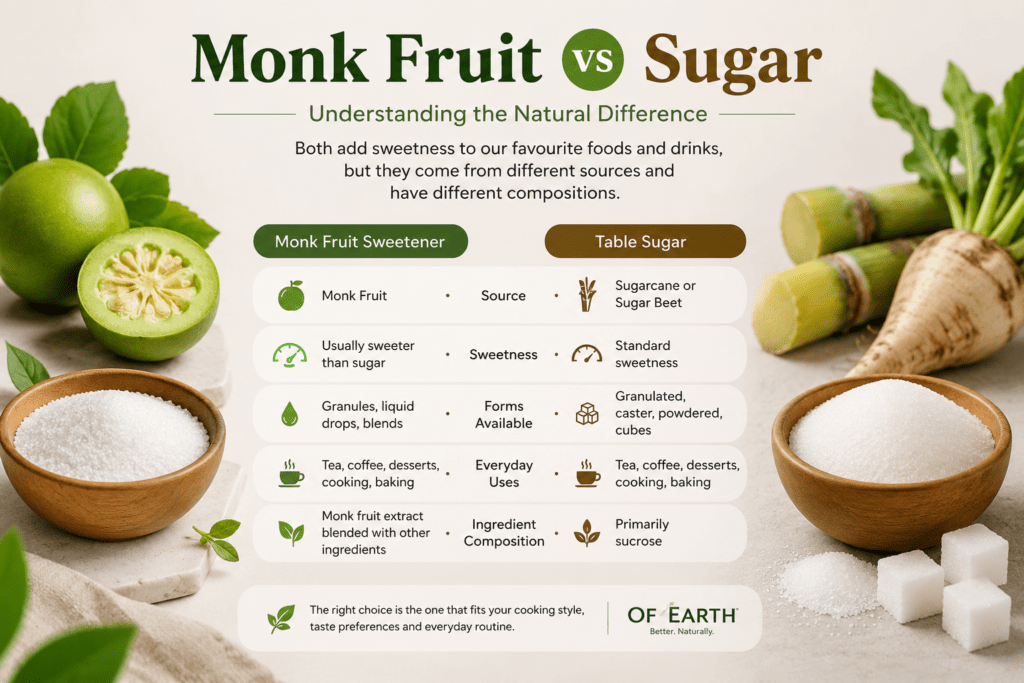
What’s the Difference Between Monk Fruit and Sugar? Sugar has been a staple in kitchens for generations. Whether it’s sweetening your morning tea, baking a birthday cake, or preparing traditional desserts, sugar has always played a central role in everyday cooking. In recent years, however, many people have started exploring alternatives that better align with their personal preferences and lifestyles. One of the most talked-about options is Monk Fruit Sweetener. While both add sweetness, they are very different in terms of their origin, composition, sweetness profile and how they’re used. In this article, we’ll explore the key differences between Monk Fruit and sugar to help you make an informed choice. What Is Sugar? Sugar is one of the world’s most commonly used sweeteners. The type most people use at home is table sugar, also known as sucrose. It is typically produced from either: After harvesting, the juice is extracted, refined and crystallised to create the familiar white granules found in kitchens around the world. Sugar is valued not only for its sweetness but also because it contributes texture, colour and structure to many recipes. What Is Monk Fruit? Monk Fruit is a small green fruit native to East Asia , where it has been cultivated for centuries. Its sweetness comes from naturally occurring compounds called mogrosides, which are extracted from the fruit. Because monk fruit extract is naturally much sweeter than sugar, it is commonly blended with ingredients such as allulose or erythritol to create products that are easier to measure and use in everyday cooking and beverages. Today, Monk Fruit Sweeteners are available in several forms, including: Monk Fruit vs Sugar: A Quick Comparison Feature Monk Fruit Sweetener Table Sugar Source Monk Fruit Sugarcane or Sugar Beet Sweetness Usually sweeter than sugar (depending on formulation) Standard sweetness Forms Available Granules, liquid drops, blends Granulated, caster, powdered, cubes Everyday Uses Tea, coffee, desserts, cooking, baking Tea, coffee, desserts, cooking, baking Ingredient Composition Monk Fruit extract blended with other ingredients depending on the product Primarily sucrose Where Do They Come From? Although both are used to sweeten food, their origins are entirely different. Sugar Sugar begins as sugarcane or sugar beet, which undergoes several processing steps before becoming the white crystals commonly used in households. Monk Fruit Monk Fruit Sweetener starts with monk fruit, where the naturally sweet compounds (mogrosides) are carefully extracted and formulated into consumer-friendly products. Sweetness: They Don’t Work Exactly the Same One of the biggest differences is sweetness intensity. Table sugar has a fixed sweetness level that most recipes are built around. Monk Fruit extract, however, is naturally much sweeter. That’s why manufacturers blend it with ingredients such as allulose or erythritol to create products that are easier to use. Some Monk Fruit Sweeteners are designed as: Always check the product label to understand how much to use. Taste Comparison Taste is one of the most personal aspects of choosing a sweetener. Sugar Sugar delivers a familiar sweetness that people have grown up with. Monk Fruit Many people enjoy Monk Fruit because of its smooth sweetness, especially when blended thoughtfully. As with any ingredient, flavour perception varies from person to person, and different formulations can taste slightly different. How They’re Used in Everyday Cooking Both sugar and Monk Fruit Sweeteners can be used in a variety of recipes. Common uses include: The exact performance may vary depending on the formulation, so it’s always helpful to follow the product’s usage instructions. Reading the Ingredient List Matters Not all Monk Fruit Sweeteners are identical. Some products contain: Understanding the ingredient list allows you to choose the formulation that best matches your preferences. At Of Earth, we believe transparency is essential. Every ingredient used in our products is clearly listed, so you know exactly what you’re bringing into your kitchen. Choosing the Right Sweetener for Your Kitchen Instead of asking which sweetener is “better,” consider how you plan to use it. Think about questions such as: The right choice is the one that fits your cooking style, taste preferences and everyday routine. Why More People Are Exploring Monk Fruit Sweeteners Interest in Monk Fruit has grown steadily as consumers look for greater variety in their kitchen pantry. Its versatility, pleasant sweetness and availability in different formulations have made it a popular choice for everything from morning beverages to homemade desserts. Whether you’re preparing a cup of coffee or experimenting with a new recipe, choosing a quality Monk Fruit Sweetener from a trusted brand can make the experience simple and enjoyable. Discover Of Earth Monk Fruit Sweeteners At Of Earth, we believe that everyday ingredients should be honest, thoughtfully crafted and easy to use. Our Monk Fruit Sweeteners are available in carefully developed formulations designed to suit different preferences-from convenient liquid drops to versatile granules. Explore our range and discover a sweeter way to enjoy your favourite foods and drinks. Frequently Asked Questions Is Monk Fruit the same as sugar? No. Sugar and Monk Fruit come from different natural sources and have different compositions and sweetness characteristics. Does Monk Fruit taste exactly like sugar? Taste is subjective. Many people find Monk Fruit blends offer a familiar sweetness, though experiences can vary depending on the formulation. Can I replace sugar with Monk Fruit in recipes? Many Monk Fruit Sweeteners are designed to replace sugar in recipes. Always check the product’s sweetness ratio and usage instructions before cooking or baking. Are all Monk Fruit Sweeteners identical? No. Different brands may use different ingredients and sweetness ratios. Reading the ingredient list is always recommended. Which Of Earth Monk Fruit Sweetener should I choose? If you’re looking for an everyday granulated sweetener, explore our Monk Fruit blends. For convenient sweetening on the go, our Monk Fruit Liquid Drops are an excellent choice. Other questions to consider: How to Choose the Right Monk Fruit Sweetener

Monk Fruit vs Sugar: What’s the Difference? | Of Earth Read More »

Which Natural Sweetener is the best

Monk Fruit vs Stevia: Which Natural Sweetener Is Better?

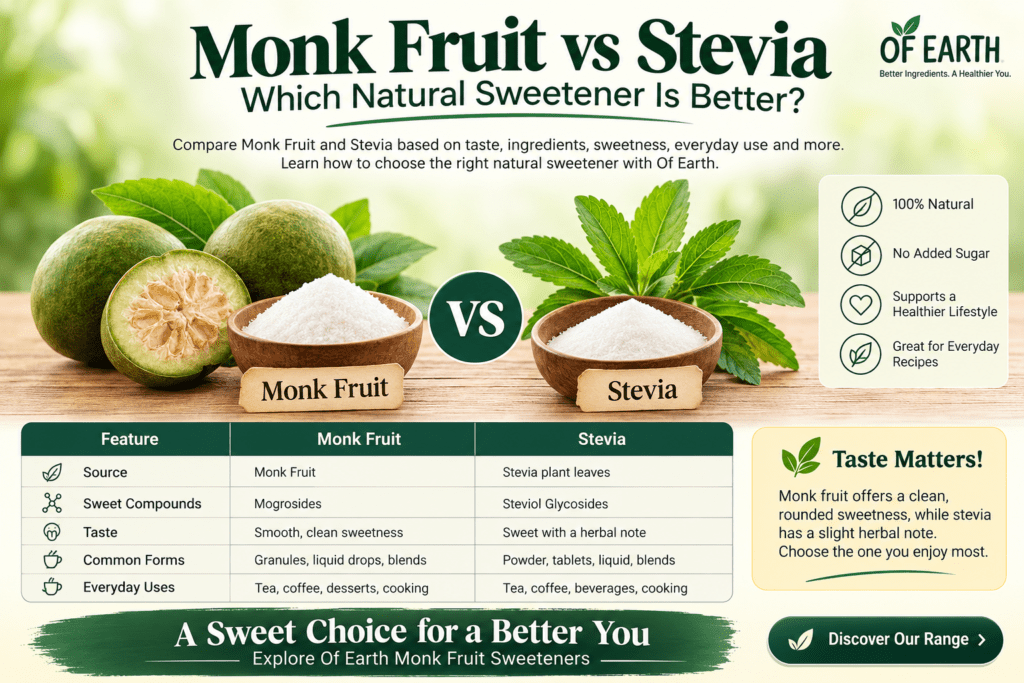
As more people look for ways to reduce added sugar, natural sweeteners have become increasingly popular. Among the many options available today, Monk Fruit and Stevia are two of the most recognised plant-derived sweeteners. While both are used as alternatives to sugar, they differ in where they come from, how they taste, how they’re formulated, and how they’re commonly used. If you’ve ever wondered which one might suit your preferences better, this guide explains the differences in a clear and practical way. What Is Monk Fruit? Monk Fruit is a small green fruit native to southern China. For centuries, it has been cultivated in the mountainous regions of Guangxi Province. Its sweetness comes from naturally occurring compounds called mogrosides. These compounds are extracted from the fruit and used to create sweeteners for beverages, desserts, cooking and everyday recipes. Because monk fruit extract is intensely sweet, it is commonly blended with ingredients such as allulose or erythritol to make it easier to measure and use in place of regular sugar. What Is Stevia? Stevia comes from the leaves of the Stevia rebaudiana plant, which is native to South America. The sweet compounds found within the leaves are known as steviol glycosides. These compounds are purified and used in a wide variety of food and beverage products around the world. Like monk fruit, stevia extract is highly concentrated and is often combined with other ingredients for easier everyday use. Monk Fruit V/S Stevia at a glance Feature Monk Fruit Stevia Source Monk Fruit Stevia plant leaves Sweet Compounds Mogrosides Steviol Glycosides Taste Smooth, clean sweetness Sweet with a herbal note that some people notice Common Forms Granules, liquid drops, blends Powder, tablets, liquid, blends Everyday Uses Tea, coffee, desserts, cooking Tea, coffee, beverages, cooking Taste: The Biggest Difference For many people, taste is the deciding factor. Monk Fruit Many consumers describe monk fruit as having a clean sweetness that works well in both hot and cold beverages. Depending on the formulation, it can provide a flavour profile that feels familiar in everyday recipes. Stevia Stevia is naturally sweet, but some people notice a herbal or lingering aftertaste, particularly when used in larger quantities. Others enjoy it and use it regularly without issue. Taste is highly personal, so the best option is often the one you enjoy using consistently. Why Ingredient Lists Matter One common misconception is that every monk fruit or stevia product is identical. In reality, two products with the same name may contain completely different ingredient combinations. Some products include: That’s why reading the ingredient list is one of the most important steps before purchasing any sweetener. At Of Earth, transparency is a core principle. Every ingredient used in our formulations is clearly listed so you know exactly what you’re choosing. Everyday Uses Both monk fruit and stevia can be incorporated into a variety of recipes. Popular uses include: Different formulations may behave differently during cooking, so it’s always best to follow the usage instructions provided with the product. Sweetness Levels Both monk fruit and stevia are considerably sweeter than table sugar in their concentrated forms. For this reason, manufacturers usually blend them with other ingredients to make them easier to measure and use. Some products are designed as: Understanding the sweetness ratio helps achieve consistent results in recipes. Choosing Between Monk Fruit and Stevia Instead of asking which one is “better,” consider which one best fits your preferences. Monk Fruit may be suitable if you prefer: Stevia may suit you if you: There is no universal answer-only the choice that works best for you. Questions to Ask Before Buying Any Sweetener Before selecting a product, consider the following: What ingredients are included? Read the ingredient panel carefully. What is the sweetness ratio? Knowing whether it’s a 1:1 replacement or a more concentrated formulation makes everyday use easier. How will you use it? Tea and coffee may require different characteristics than baking or desserts. Does the brand clearly explain the product? Transparent ingredient lists, nutrition information and clear usage instructions help you make informed decisions. Why More People Are Exploring Monk Fruit Interest in monk fruit has grown steadily as consumers seek alternatives to traditional sweeteners. Many appreciate its versatility for beverages and home cooking, while brands continue to develop innovative formulations that suit different preferences. Whether you choose a granulated blend or convenient liquid drops, selecting a product from a trusted, transparent brand can make all the difference. Discover Of Earth Monk Fruit Sweeteners At Of Earth, we believe choosing better ingredients should feel simple. Our collection of Monk Fruit Sweeteners has been thoughtfully developed for everyday use-whether you’re stirring sweetness into your morning coffee, preparing desserts, or experimenting with new recipes in the kitchen. Explore our range to find the formulation that best suits your lifestyle and taste preferences. Frequently Asked Questions Is monk fruit sweeter than stevia? Both are naturally very sweet. The perceived sweetness depends on the specific formulation and blend. Which tastes more like sugar? Many people find monk fruit blends offer a familiar sweetness, although taste preferences vary from person to person. Can monk fruit and stevia both be used in baking? Yes. Many formulations are suitable for baking and cooking. Always follow the manufacturer’s usage guidance. Are all monk fruit sweeteners the same? No. Products vary in ingredients, sweetness ratio, texture and intended use. Can I switch from stevia to monk fruit? Many people enjoy trying both to determine which taste and formulation best suits their everyday preferences. Other questions to consider: How to Choose the Right Monk Fruit Sweetener What’s the difference between Monk Fruit and Sugar? Why does Monk Fruit & Erythritol blend so good? And is there some precautions we need to take while consuming erythritol? Monk Fruit with Allulose: What Makes This Blend Unique?

Monk Fruit vs Stevia: Which Natural Sweetener Is Better? Read More »