
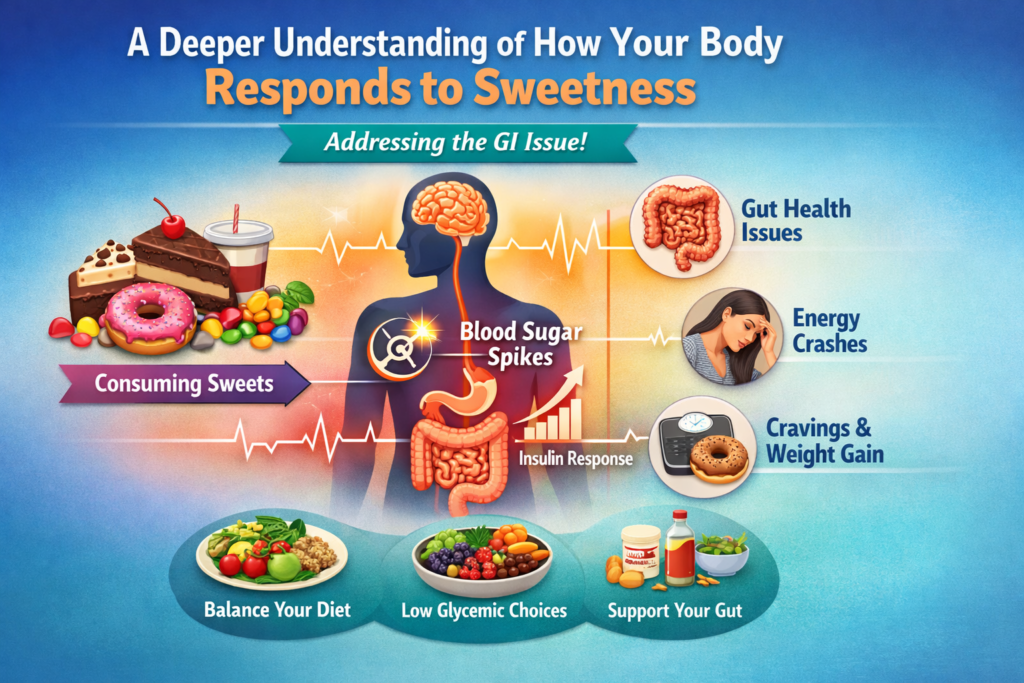
A deeper understanding of how your body responds to sweetness- Addressing the GI issue!
When managing conditions like Type 2 Diabetes, it’s not just about how much you eat- it’s about how your body responds to what you eat. That’s where the concept of the Glycemic Index (GI) becomes important.
Because not all carbohydrates- and not all sweeteners- behave the same way inside the body.
1. What Glycemic Index Actually Measures
The Glycemic Index ranks foods based on how quickly they raise blood sugar levels after consumption.
- High GI foods → rapid spikes in blood sugar
- Low GI foods → slower, more controlled release
This matters because sharp spikes are often followed by sudden drops-
creating a cycle of:
- energy crashes
- increased hunger
- more cravings
For diabetics, this cycle isn’t just uncomfortable; it’s risky.
2. Why Blood Sugar Spikes Are a Bigger Concern in Diabetes
In people with Type 2 Diabetes:
- the body either doesn’t produce enough insulin
- or doesn’t use it effectively
So, when high GI foods are consumed:
- blood glucose rises quickly
- the body struggles to bring it down efficiently
Over time, repeated spikes can contribute to:
- poor Glycemic control
- increased insulin resistance
- higher risk of complications
This is why managing GI isn’t optional; it’s foundational.
3. Where Regular Sugar Fits In
Regular sugar (sucrose) is a high GI ingredient.
That means:
- it enters the bloodstream quickly
- causes sharp glucose spikes
- offers little satiety
And because it’s often present in:
- tea and coffee
- packaged foods
- desserts
- beverages
…it becomes a frequent, not occasional, contributor to blood sugar fluctuations.
4. The Role of Low-GI Sweetness
Reducing sugar intake is one part of the solution. But replacing it smartly is what makes the shift sustainable. This is where low or zero GI alternatives come into the picture.
Sweeteners that do not significantly raise blood glucose levels can:
- help avoid sudden spikes
- support more stable energy levels
- reduce the Glycemic load of meals
Without taking away the experience of sweetness.
5. Where Of Earth’s Monk Fruit Sweetener Fits In
Of Earth’s Monk fruit sweetener stands out because it contains compounds called mogrosides, which provide sweetness without being metabolised like sugar.
This means:
- it has little to no impact on blood glucose levels
- it does not trigger the same spikes as regular sugar
- it can be used in everyday foods without disrupting Glycemic balance
For people managing diabetes, this can make everyday habits easier—
like:
- sweetening tea or coffee
- preparing desserts at home
- adding sweetness to breakfast meals
The experience stays familiar. The metabolic impact changes.
6. What It Helps With Versus What It Doesn’t Help With
This is important to understand clearly.
Monk fruit sweetener can:
- reduce sugar intake
- help avoid glucose spikes
- support better dietary control
But it does not:
- cure diabetes
- replace medication
- eliminate the need for balanced meals
It supports the system- it doesn’t replace it.
The Positioning Rule: Control, Not Elimination
Managing diabetes isn’t about removing everything you enjoy.
It’s about:
- choosing better inputs
- reducing unnecessary spikes
- building consistency over time
Monk fruit sweetener fits into this as a supportive tool– much like:
- a structured meal plan
- regular movement
- mindful eating habits
A Smarter Way Forward
Understanding the Glycemic Index changes how you look at food.
It shifts the question from: “Is this sweet?”
To: “How will this affect my body?”
And that’s where better choices begin. Because the goal isn’t to remove sweetness from life-
It’s to experience it in a way that works with your body, not against it.