Of Earth | Marquee
100% Plant-Based Sweetness made from Monk Fruit 0 Glycemic Index • Low Calorie • No Artificial Sweeteners Clean-Label Ingredients Made for Everyday Use

Uncategorized

eyjidwnrzxqioijjb250zw50lmhzd3n0yxrpyy5jb20ilcjrzxkioijnawzcl21vbmstznj1axquanbniiwizwrpdhmionsicmvzaxplijp7indpzhroijoimtiwmcj9fx0=

How to Use Monk Fruit in Real Life- and what are you actually achieving?

Reducing sugar sounds simple until it meets real life.Your morning tea.Your post-meal dessert.That “just a little something sweet” moment.The goal isn’t to eliminate sweetness.It’s to shift where that sweetness comes from – intelligently.First, What Are You Actually Cutting?When you replace sugar with monk fruit, you’re mainly reducing two things:

How to Use Monk Fruit in Real Life- and what are you actually achieving? Read More »

images

10 Ways Regular White Sugar Affects Your Body (Without the Hype)

Sugar isn’t the villain it’s often made out to be. Your body actually needs glucose to function.But here’s where things shift: it’s not sugar itself – it’s the amount and the form (refined, addedsugar) that starts to impact health over time.This isn’t about fear. It’s about clarity.

10 Ways Regular White Sugar Affects Your Body (Without the Hype) Read More »

chatgpt image mar 27, 2026, 01 35 01 pm

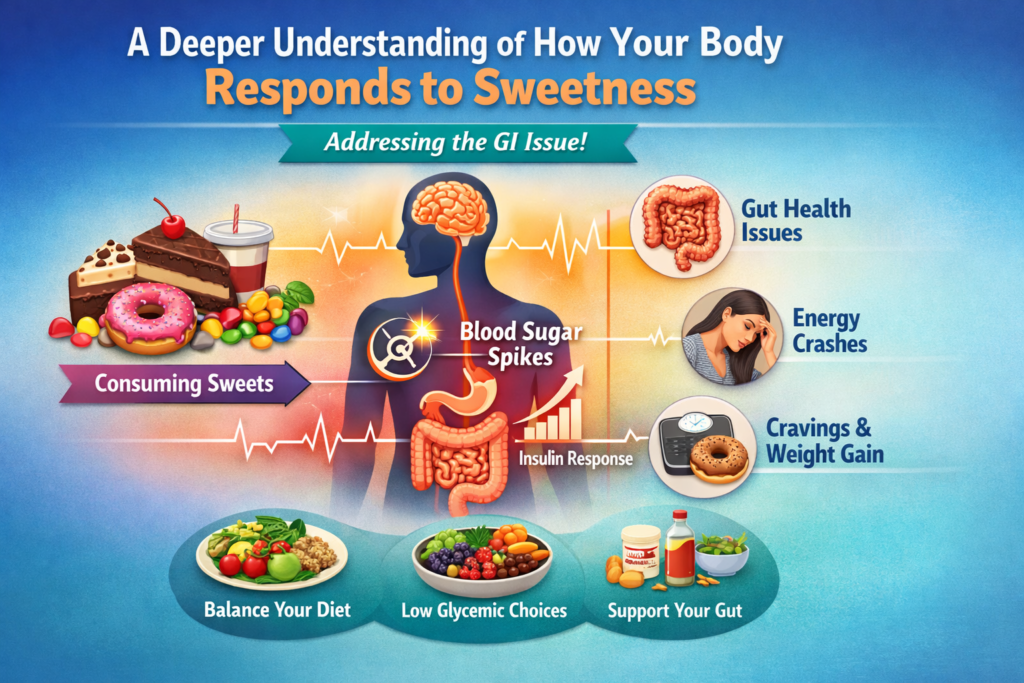
A deeper understanding of how your body responds to sweetness- Addressing the GI issue!

When managing conditions like Type 2 Diabetes, it’s not just about how much you eat- it’s about how your body responds to what you eat. That’s where the concept of the Glycemic Index (GI) becomes important. Because not all carbohydrates- and not all sweeteners- behave the same way inside the body. 1. What Glycemic Index Actually Measures The Glycemic Index ranks foods based on how quickly they raise blood sugar levels after consumption. This matters because sharp spikes are often followed by sudden drops-creating a cycle of: For diabetics, this cycle isn’t just uncomfortable; it’s risky. 2. Why Blood Sugar Spikes Are a Bigger Concern in Diabetes In people with Type 2 Diabetes: So, when high GI foods are consumed: Over time, repeated spikes can contribute to: This is why managing GI isn’t optional; it’s foundational. 3. Where Regular Sugar Fits In Regular sugar (sucrose) is a high GI ingredient. That means: And because it’s often present in: …it becomes a frequent, not occasional, contributor to blood sugar fluctuations. 4. The Role of Low-GI Sweetness Reducing sugar intake is one part of the solution. But replacing it smartly is what makes the shift sustainable. This is where low or zero GI alternatives come into the picture. Sweeteners that do not significantly raise blood glucose levels can: Without taking away the experience of sweetness. 5. Where Of Earth’s Monk Fruit Sweetener Fits In Of Earth’s Monk fruit sweetener stands out because it contains compounds called mogrosides, which provide sweetness without being metabolised like sugar. This means: For people managing diabetes, this can make everyday habits easier— like: The experience stays familiar. The metabolic impact changes. 6. What It Helps With Versus What It Doesn’t Help With This is important to understand clearly. Monk fruit sweetener can: But it does not: It supports the system- it doesn’t replace it. The Positioning Rule: Control, Not Elimination Managing diabetes isn’t about removing everything you enjoy. It’s about: Monk fruit sweetener fits into this as a supportive tool– much like: A Smarter Way Forward Understanding the Glycemic Index changes how you look at food. It shifts the question from: “Is this sweet?” To: “How will this affect my body?” And that’s where better choices begin. Because the goal isn’t to remove sweetness from life- It’s to experience it in a way that works with your body, not against it.

A deeper understanding of how your body responds to sweetness- Addressing the GI issue! Read More »

2 (1)

Why Did World Health Organization (WHO) Ask the World to Reduce Sugar?

In 2015, the World Health Organization made a strong global recommendation: Reduce free sugar intake to less than 10% of daily calories—ideally even below 5%.  At first glance, it sounds like standard health advice. But when you look deeper, this wasn’t just about “eating less sugar.” It was about addressing a global health pattern that had quietly gone out of control. Let’s break down why this recommendation became necessary. 1. Because Sugar Was Driving Weight Gain-Silently The WHO didn’t make this call based on trends or opinions. It came from consistent scientific evidence. Research showed that: But here’s the deeper insight: Sugar doesn’t just add sweetness- it adds extra energy (calories) without making you feel full. That means: This is how weight gain becomes “invisible.” 2. Because Children Were Being Hit the Hardest One of the strongest triggers for this guideline was what was happening with children. Studies found that: And this isn’t just about appearance. Early exposure to high sugar diets sets up: In simple terms:Sugar habits formed early tend to stay for life. 3. Because of Tooth Decay- A Lifelong, Cumulative Problem This is one of the most underestimated reasons. WHO highlighted that: But here’s the deeper layer: Tooth decay is not a one-time issue. It’s cumulative over a lifetime.  Even small reductions in sugar intake early in life can: That’s why WHO pushed even further- to below 5% for added benefits. And since Of Earth’s Monk Fruit Sweetener is not metabolised by oral bacteria, it does not contribute to tooth decay the way regular sugar does. 4. Because Sugar Is Everywhere (Even When You Don’t See It) This was a major global concern. WHO pointed out that a large portion of sugar today is “hidden” in everyday foods: For example:-A single soda can contain up to 40g of sugar  This means people weren’t just eating sugar in desserts- they were consuming it throughout the day without awareness. That changes the problem from occasional indulgence → constant exposure. 5. Because of the Rise of Non-Communicable Diseases (NCDs) The bigger picture wasn’t just sugar. It was the global explosion of: WHO identified high sugar intake as a key contributing factor to these conditions. And here’s the critical insight: This wasn’t happening in one country. It was happening worldwide, across age groups. Which is why the recommendation became a global policy direction—not just dietary advice. 6. Because Even “Healthy Sugars” Were Being Misunderstood WHO made a very clear distinction: Not all sugars are equal. The recommendation specifically targets free sugars, which include: But not: Why? Because in whole foods, sugar comes with: The issue wasn’t sweetness- it was the form and concentration of sugar. The Real Insight: This Was About Patterns, Not Just Sugar The WHO guideline wasn’t saying: “Sugar is bad.” It was saying: The way we are consuming sugar today is fundamentally different from how our bodies are designed to handle it. What This Means for You Today This recommendation wasn’t meant to eliminate sweetness. It was meant to: And that’s where smarter alternatives and mindful use come in. A Smarter Way to Look at Sweetness Reducing sugar isn’t about restriction. It’s about regaining control over how, when, and why you consume it. Because the real goal isn’t just: “less sugar”. It’s: a way of eating that supports your body- without taking away the joy of food. This is the very real problem that we are solving with Of Earth’s Monk fruit sweeteners!

Why Did World Health Organization (WHO) Ask the World to Reduce Sugar? Read More »

whatsapp image 2026 03 27 at 12.20.59 pm

What Not To Do When You Start Replacing Sugar with Monk Fruit Sweetener

A smarter way to enjoy sweetness still needs smarter habits. Switching to Of Earth’s Monk Fruit Sweetener is a powerful step toward reducing sugar. It feels like a small change, but it can make a meaningful difference in how you experience sweetness every day. But here’s something important that often gets overlooked: Monk fruit is a tool, not a shortcut. Just like protein powder or pre-workout supports your fitness but doesn’t replace it, monk fruit sweetener supports better choices—but doesn’t do the work for you. Here are the most common mistakes to avoid when you make the switch. 1. Thinking You Can Eat Unlimited Sweets Now One of the biggest misconceptions is: “If it’s sugar-free, I can have as much as I want.” Even when made with monk fruit sweetener, desserts are still desserts. They may have fewer calories or a lower Glycemic impact, but they can still: The shift isn’t about eating more sweets. It’s about enjoying them more mindfully. 2. Expecting It to Fix a Poor Diet Monk fruit sweetener can improve one part of your diet- but it cannot balance everything else. If your meals are still: …then simply swapping sugar won’t create real change. Think of it as upgrading an ingredient, not overhauling your lifestyle. Real results come from combining it with better overall eating habits. 3. Believing It Will Melt Fat This is where expectations often go wrong. Monk fruit sweetener doesn’t: What it can do is help reduce excess sugar intake—which may support weight goals when combined with the right habits. Fat loss still depends on: Monk fruit helps- but it doesn’t replace the process of exercise and calorie deficit. 4. Assuming It’s Completely Risk-Free for Everyone Monk fruit sweetener is generally considered safe and well-tolerated. But like any ingredient, it’s not about “zero thought required.” Some people may: Also, different products may contain different combinations (like erythritol or other natural carriers). The key is awareness- not blind trust. 5. Replacing Sugar Without Changing Your Relationship with Sweetness This is the most subtle- but most important mistake. If everything you eat still needs to taste sweet, then the dependency hasn’t changed- only the source has. The goal is not just to replace sugar. The goal is to rebalance your palate. Over time, many people find that: That’s where the real transformation happens.

What Not To Do When You Start Replacing Sugar with Monk Fruit Sweetener Read More »

colorful italian soda 1339 6693

How to Use Monk Fruit Sweetener in Everyday Life

A natural way to enjoy sweetness every day Sweetness has always been a part of everyday moments, the first cup of chai in the morning, something sweet after dinner, or a homemade dessert shared with family. But today many people are becoming more mindful about sugar and looking for ways to enjoy sweetness without overloading on it. That’s where monk fruit sweetener offers a simple alternative. Made from naturally derived ingredients, monk fruit sweetener provides the sweetness people love without the heaviness of regular sugar. The best part is that it can fit seamlessly into your daily routine- often without changing the way you cook, bake, or enjoy your favorite foods. Here are a few easy ways to bring Of Earth’s monk fruit sweetener into everyday life. 1. Sweeten Your Morning Tea or Coffee One of the simplest places to start is with your daily cup. Whether it’s tea, coffee, herbal tea, or any other beverage- Of Earth’s monk fruit sweetener dissolves easily and provides a pleasant sweetness that feels familiar- just without the sugar. Many people find that switching their daily beverages is the easiest first step toward reducing sugar because sometimes the smallest change brings the biggest impact! 2. Bake Cakes, Cookies and Muffins Of Earth’s Monk fruit sweetener works beautifully in baking. From cakes and muffins to cookies and brownies, monk fruit sweetener can work beautifully in baking. You can use it when preparing family favorites or experimenting with new recipes. It allows desserts to stay delicious while feeling lighter and more balanced. Desserts that taste just as indulgent, only you are no longer worried about weight gain of calories or the sugar spikes! 3. Add It to Breakfast Favorites A spoon of sweetness often finds its way into morning meals. Try monk fruit sweetener in: Since monk fruit sweetener contains little to no calories and doesn’t raise blood sugar the way regular sugar does, it can help people enjoy sweetness while keeping energy levels more balanced. 4. Sweeten Homemade Desserts Traditional desserts don’t have to disappear when you start reducing sugar. Of Earth’s Monk fruit sweetener can be used in many homemade favorites such as: It blends easily into recipes and helps maintain the comforting sweetness people expect from desserts. 5. Use It in Everyday Cooking Sweetness isn’t just for desserts.Sweetness also plays a role in savory cooking. A small pinch of monk fruit sweetener can help balance flavors in sauces, dressings, and marinades instead of regular sugars. It’s a simple way to round out a dish without relying on refined sugar. Simple Shift Toward Better Sweetness can make a genuine difference Switching to monk fruit sweetener doesn’t mean giving up sweetness. It simply means choosing a smarter way to enjoy it. At Of Earth, our goal is to make that choice easy by bringing you sweetness that feels closer to nature and kinder to your everyday habits. Because the foods we love should always feel good to enjoy.

How to Use Monk Fruit Sweetener in Everyday Life Read More »

9c5604ab5d203dca166253f666a4f1cd

Monk Fruit vs Sugar What Happens Inside Your Body

Most of us don’t think twice when we add a spoon of sugar to our tea or desserts. Sweetness feels harmless in small moments. But inside the body, sugar and monk fruit sweetener behave very differently. Understanding that difference can help you make smarter everyday choices about sweetness. Let’s look at what actually happens. 1. How Your Body Processes Sugar When you eat regular sugar, your body quickly breaks it down into glucose. This glucose enters the bloodstream and causes blood sugar levels to rise rapidly. In response, the body releases insulin to help move that sugar into your cells for energy. When this cycle happens too often, it can lead to: Over time, high sugar consumption can also contribute to weight gain and metabolic stress. 2. How Your Body Responds to Monk Fruit Monk fruit sweetener works very differently. Its sweetness comes from natural compounds called mogrosides, which the body does not metabolize like regular sugar. Because of this, monk fruit sweetener does not raise blood glucose levels or trigger the same insulin response. This means: For many people, it offers a way to enjoy sweetness while reducing added sugar in their diet. 3. The Everyday Impact The difference between sugar and monk fruit may seem small in a single cup of tea. But when those small choices happen every day, they add up. Replacing sugar with Of Earth’s  monk fruit sweetener in everyday habits – tea, coffee, desserts, or breakfast bowls –  can gradually help reduce overall sugar consumption. And sometimes, better health begins with choices that feel simple and sustainable. A Smarter Way to Sweeten At Of Earth, we believe sweetness should feel natural and balanced. Monk fruit sweetener offers a way to enjoy the foods and drinks you love while moving toward a more mindful relationship with sugar. Because the goal isn’t to remove sweetness from life. It’s simply to choose it more wisely.

Monk Fruit vs Sugar What Happens Inside Your Body Read More »

34b0461c867da7150a37676115cd29dd

Why Monk Fruit Is the Smartest Sugar Alternative Today

A better way to enjoy sweetness Sweetness is part of everyday life – in our tea, our desserts, and the little moments we share around food. But as more people become aware of how refined sugar affects the body, many are looking for smarter ways to enjoy sweetness without overdoing sugar. Monk fruit sweetener has quietly become one of the most interesting natural alternatives available today. Here’s why. 1. Sweetness Without the Sugar Load Regular sugar adds both calories and carbohydrates, which the body quickly converts into glucose. This often causes rapid spikes in blood sugar levels. Monk fruit sweetener works differently. Its sweetness comes from natural compounds called mogrosides, which the body does not process like sugar. Because of this, monk fruit typically does not raise blood sugar levels or trigger the same insulin response. For people trying to reduce sugar intake, that difference can make everyday choices a little easier. 2. Naturally Sweet and Surprisingly Powerful Monk fruit may look like a small melon, but its sweetness is incredibly concentrated. The natural compounds inside the fruit can be far sweeter than regular sugar, meaning only a small amount is needed to sweeten foods and drinks. This allows people to enjoy sweetness while using much less sweetener overall, which can help reduce daily sugar consumption. 3. A Smarter Fit for Modern Lifestyles Today’s eating habits are shifting toward cleaner ingredients and mindful choices. Monk fruit sweetener fits naturally into this movement because it can be used in many everyday foods: Because it provides sweetness without the usual sugar load, it has become popular among people looking for low-sugar, low-calorie, or balanced diets. A Simpler Way to Sweeten Choosing monk fruit sweetener doesn’t mean giving up sweetness. It simply offers another way to enjoy the foods you love while being more conscious of how much sugar you consume. As more people look for ingredients that align with modern wellness habits and cleaner labels, monk fruit has steadily gained attention as a natural sweetening option. For many households, it has become a practical way to reduce sugar intake while still enjoying everyday sweetness.

Why Monk Fruit Is the Smartest Sugar Alternative Today Read More »